


Perinatal Depression and Anxiety (Fathers & Partners)
Perinatal depression and anxiety? But I didn’t have a baby!
Perinatal depression and anxiety can occur during pregnancy or within the year following the birth of a child. While more commonly acknowledged in birthing parents (maternal perinatal depression and anxiety), fathers or partners (paternal perinatal depression and anxiety) can also experience it.
Symptoms of maternal and paternal perinatal depression and anxiety can vary. You may experience some or all of the symptoms, and at different levels of intensity. Research has identified that paternal perinatal depression and anxiety symptoms tend to develop more slowly and gradually over the first year with peak onset at 3-6 months after childbirth. Paternal perinatal depression and anxiety symptoms are less likely to be what is expected as a typical depression and anxiety and may present as:
- Anger or irritability
- Violent or aggressive behaviour
- Withdrawing from relationships
- Loss of interest in hobbies and regular activities
- Increase in impulsive or risk-taking behaviour, including turning to substances such as alcohol or prescription drugs
- Increase in focus on work or other distractions
Prevention and Treatment
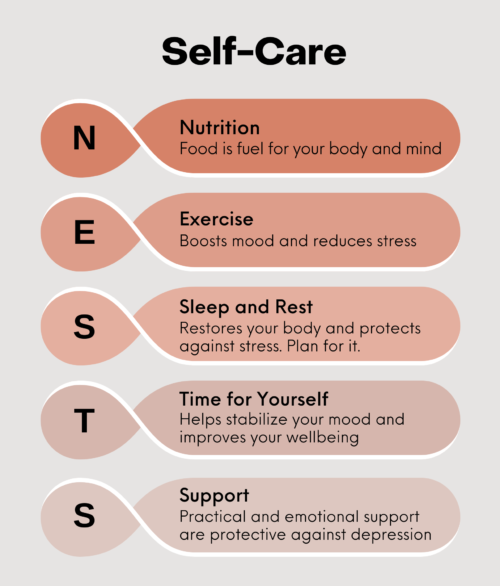
Self-care is key to protecting your overall health and well-being. It may help protect against depression and anxiety as well as help to treat it. Remembering the term NESTS can help you recall the basic steps of self-care to reduce stress and make you feel better:
- Nutrition – try to eat nutritious food when you can.
- Exercise – try to get some activity every day.
- Sleep and rest – try to get as much sleep as possible and rest when you can.
- Time for yourself – take a few moments each day to care for yourself.
- Support – ask for help from others when needed.
Screening of partners for depression and anxiety is becoming more routine in healthcare settings. However, unfamiliarity with perinatal depression and anxiety among fathers/partners continues to exist which means that it is common for it to be undiagnosed and left untreated.
Effective treatment is available
Maternal or paternal postpartum depression & anxiety can be a severe condition, but it is treatable. If you are experiencing symptoms or you notice someone you care about is experiencing signs of depression, talk with them about it. Support them in reaching out for help. Reach out yourself if you need support.
It is important to get treatment for depression and anxiety. Getting help early can help reduce how long the depression & anxiety lasts. The sooner you get treated, the sooner you will feel better.